A customer browses your website on their laptop and adds a product to the cart but doesn’t check out. Later, they get a reminder on their phone, visit your store, and complete the purchase. That’s an omnichannel customer journey – seamless, connected, and convenient.
But making this work isn’t easy. Disconnected systems, inconsistent messaging, and data silos create roadblocks. In this blog, we’ll break down these challenges, explore strategies to overcome them, and look at real-world examples. Plus, we’ll show how Usermaven helps businesses track and optimize omnichannel experiences with data-driven insights.
What is an omnichannel customer journey, and why does it matter?
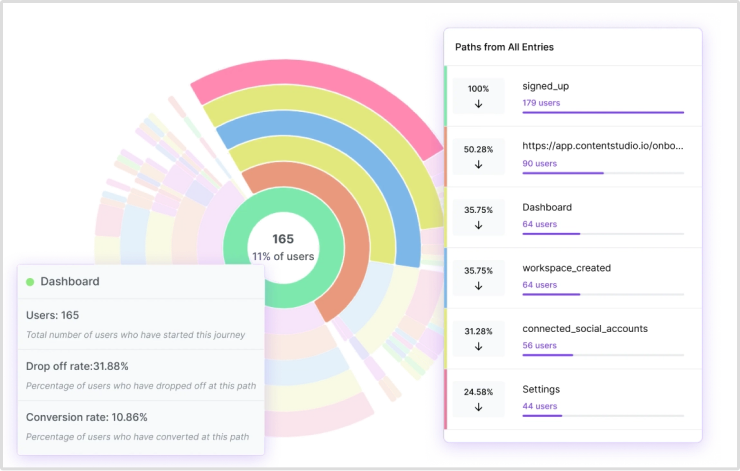
An omnichannel customer journey refers to a customer’s seamless experience with a brand across multiple channels – be it online platforms, physical stores, or customer service interactions where each touchpoint integrates smoothly with others, ensuring a consistent and unified experience.
How does an omnichannel customer journey work?
Think of a customer browsing shoes on a brand’s website. They add a pair to their cart but don’t check out. Later, they receive a reminder via email, open the brand’s app, and see personalized recommendations based on their browsing history. Finally, they visit a physical store, where a sales associate – aware of their online activity – helps them finalize the purchase.
This connected experience ensures that customers don’t have to start over at each touchpoint. Their preferences, history, and interactions follow them, making the journey smooth and personalized.
Why does the omnichannel customer journey matter?
In today’s interconnected world, customers expect fluid transitions between various platforms and devices. For instance, they might start shopping on a smartphone, continue on a laptop, and finalize the purchase in a physical store. An effective omnichannel strategy ensures that their journey is uninterrupted and cohesive, enhancing satisfaction and loyalty.
Key benefits of the omnichannel customer journey:
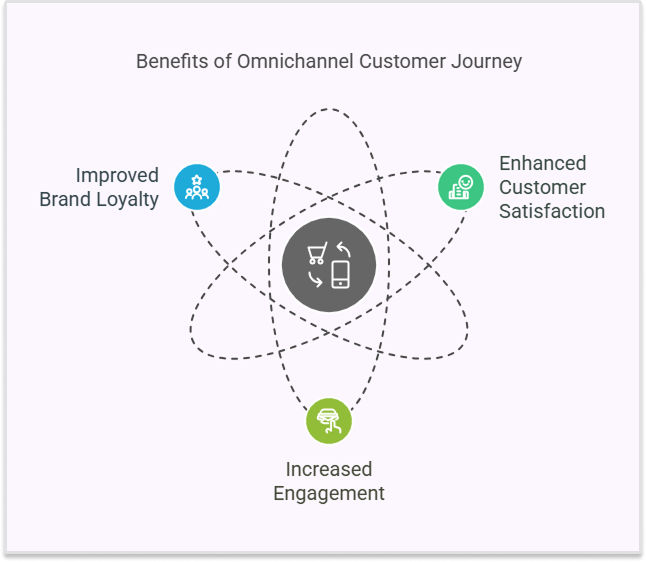
- Enhanced customer satisfaction: A unified experience reduces friction, making interactions more enjoyable.
- Increased product engagement: Consistent messaging across channels keeps customers engaged and informed.
- Improved brand loyalty: When customers can interact seamlessly across platforms, their trust and customer loyalty to the brand grow.
Incorporating an omnichannel approach isn’t just a trend – it’s essential for meeting modern consumer expectations and staying competitive.
Challenges in implementing omnichannel customer journeys
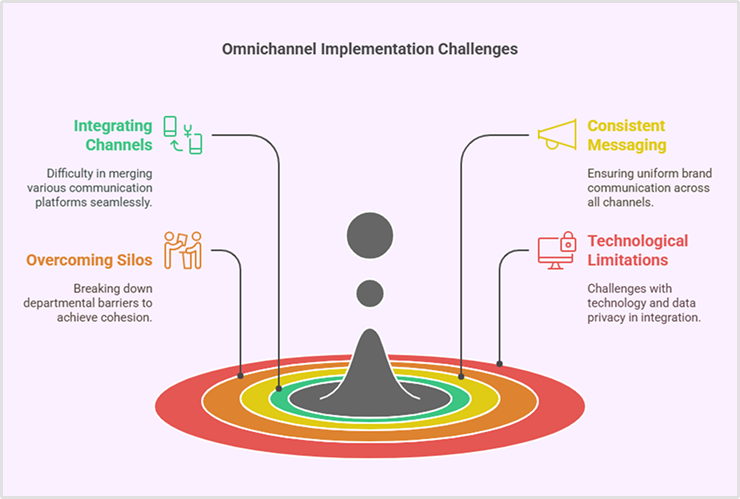
Delivering a seamless omnichannel customer journey sounds great in theory, but businesses often run into obstacles that disrupt customer experiences. Here’s a closer look at the key challenges and how to overcome them.
1. Integrating diverse channels and data sources
Customers interact with brands across multiple platforms – websites, mobile apps, social media, in-store visits, emails, and customer support chats. The challenge? These channels often operate in silos, making it hard to track customer behavior across touchpoints.
Without a unified data system, businesses struggle to create a truly omnichannel customer journey, leading to disjointed experiences. This is exactly where omnichannel analytics helps by bringing every touchpoint into one view.
Pro tip: Usermaven automatically captures customer interactions across different channels, providing a unified view of their user journey. This helps businesses connect the dots between touchpoints without complex integrations.
2. Ensuring consistent messaging and branding
A customer sees a special offer on Instagram, but when they visit your website, the discount isn’t applied. Or they receive an email promoting a sale that store associates know nothing about. These inconsistencies disrupt the omnichannel customer journey, confuse customers, and erode trust. To create a seamless experience, messaging, pricing, and branding must align across all platforms.
Pro tip: With Usermaven’s Multi-touch Attribution, you can track which marketing channels drive engagement and conversions, ensuring your messaging stays relevant and effective across all touchpoints.

3. Overcoming organizational silos
Marketing, sales, and customer support teams often work in isolation, each with its own tools and data. This lack of coordination results in a fragmented omnichannel customer journey where customers have to repeat themselves at every step. Breaking down these silos requires a culture shift – teams need access to shared data and a single customer view to create seamless interactions.
Pro tip: With the contacts hub in Usermaven, teams can centralize customer data and get real-time insights into user behavior. This allows teams to collaborate better and deliver a smoother customer experience.
4. Addressing technological limitations and data privacy concerns
Many businesses still rely on outdated systems that don’t support seamless data sharing. Even when new tools are adopted, integration challenges can slow down omnichannel customer journeys. Additionally, strict data privacy laws (such as GDPR and CCPA) require companies to handle customer data responsibly, adding another layer of complexity.
Pro tip: Usermaven simplifies compliance by capturing user interactions while respecting data privacy regulations. Its lightweight tracking ensures businesses collect actionable insights without compromising security.
By addressing these challenges with the right strategy and marketing attribution software, businesses can connect customer touchpoints, understand which channels influence engagement and conversions, and create a truly connected omnichannel customer journey – one that keeps customers engaged, satisfied, and coming back.
Effective strategies for successful omnichannel implementation
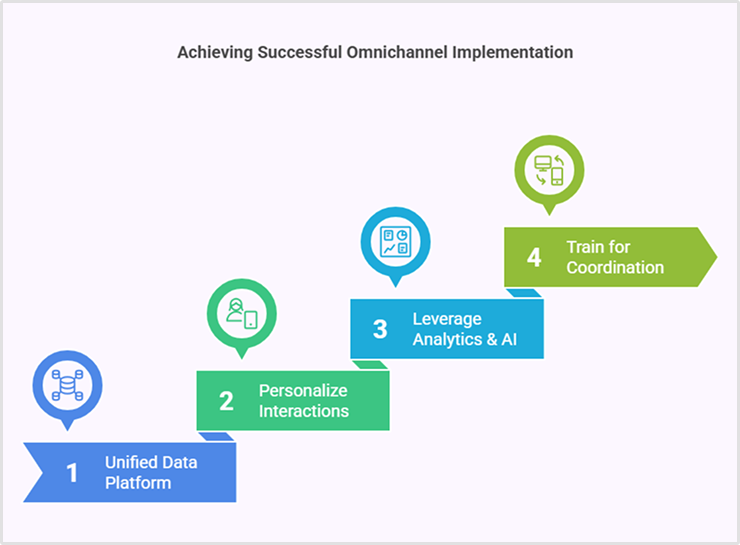
A seamless omnichannel customer journey requires more than just being present on multiple platforms – it demands a well-structured approach that ensures consistency, personalization, and data-driven decision-making. Here are key strategies to implement an effective omnichannel experience.
1. Developing a unified customer data platform
To deliver a smooth omnichannel customer journey, businesses need a centralized system where customer data from all touchpoints – website visits, social media interactions, email engagements, in-store purchases, and customer support conversations – comes together. A fragmented data structure leads to disconnected experiences, making it difficult to track customer behavior and preferences.
Pro tip: With user journeys in Usermaven, teams can automatically capture customer interactions across different channels and build a unified view of each user journey. This helps businesses connect the dots between touchpoints without complex integrations.
2. Personalizing customer interactions across channels
Customers expect brands to recognize them across platforms. Whether they interact via email, a mobile app, or a physical store, the experience should feel tailored. Personalization goes beyond using a customer’s name – it involves offering relevant product recommendations, dynamic content, and seamless transitions between online and offline interactions.
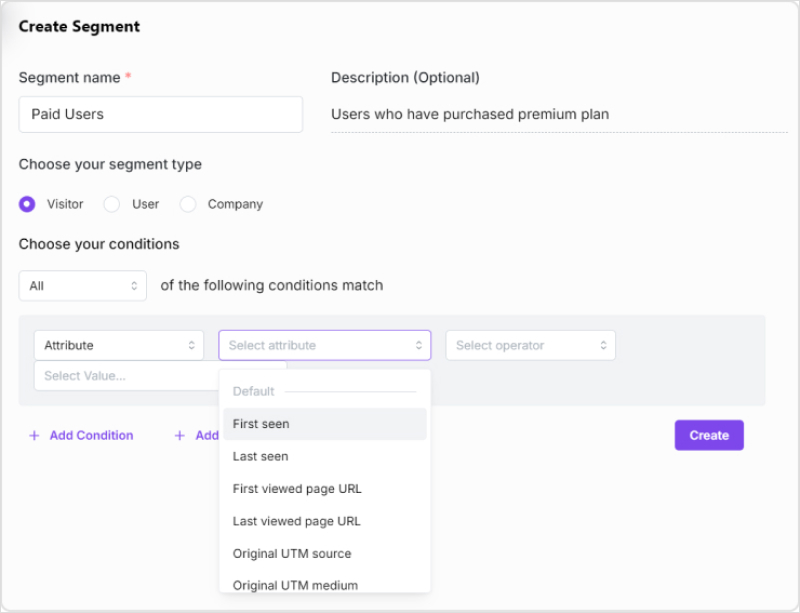
Pro tip: With Usermaven’s behavior tracking and segmentation, businesses can personalize messaging and offers based on a customer’s past interactions, leading to higher engagement and conversions.
3. Utilizing analytics and AI to understand customer behavior
Data-driven decisions are key to optimizing an omnichannel customer journey. Businesses that leverage analytics and AI can track patterns, predict customer intent, and refine their strategies based on real-time insights. AI-powered recommendations, chatbots, and predictive analytics enhance engagement by anticipating customer needs before they even express them.
Pro tip: Usermaven provides actionable insights by tracking customer journeys, smart insights through AI, identifying high-performing touchpoints, and showing which channels drive the most conversions – helping businesses optimize their omnichannel approach.
[user_journeys]
4. Training teams for cross-channel coordination
An effective omnichannel customer journey requires strong internal collaboration. If marketing, sales, and support teams operate in silos, customers may receive inconsistent information and disjointed service. Ensuring that employees are trained to understand and use shared customer insights fosters a smoother, more connected experience.
Pro tip: Usermaven facilitates cross-team collaboration by providing a single source of truth for customer data. This ensures that all departments have access to the same insights and can coordinate efforts more effectively.
By implementing these strategies and using customer journey, segmentation, and attribution insights in Usermaven, businesses can create a truly customer-centric omnichannel customer journey – one that strengthens customer engagement, boosts loyalty, and drives revenue.
Conclusion
Building a seamless omnichannel customer journey is essential for businesses that want to meet customer expectations and stay competitive. A fragmented experience leads to frustration, while a well-integrated journey fosters trust, engagement, and loyalty.
By unifying customer data, personalizing interactions, leveraging analytics, and ensuring cross-team coordination, businesses can create a smooth, consistent experience across all touchpoints. The key is to focus on integration and customer-centric strategies that remove friction and make every interaction feel connected.
A well-executed omnichannel customer journey not only improves customer satisfaction but also drives long-term business growth.
[user_journeys]
Leave a Reply