Tag: Usermaven
-
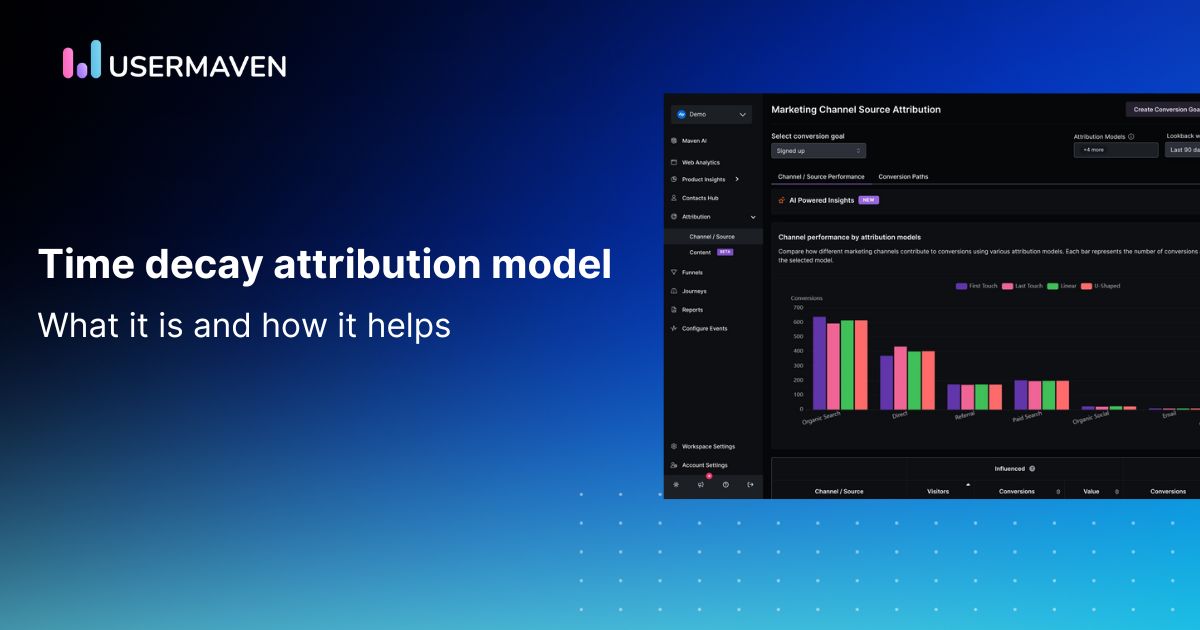
Time decay attribution model: What it is and how it helps
Let’s suppose a potential customer discovers your product through a Google ad while browsing online. Later, they click on a Facebook ad to learn more. A week goes by, and they receive an email with a discount code. Finally, they visit your site and make a purchase. Now the question is – how do you…
-

Linear attribution model: What is it, and how does it work?
Determining how marketing efforts contribute to conversions can be challenging. Each interaction has its role, but assigning credit fairly is often complex. The linear attribution model offers a simple solution by dividing credit equally among all touchpoints, making it a fundamental concept in marketing analytics. This approach provides clarity and fairness in assessing campaign performance,…
-
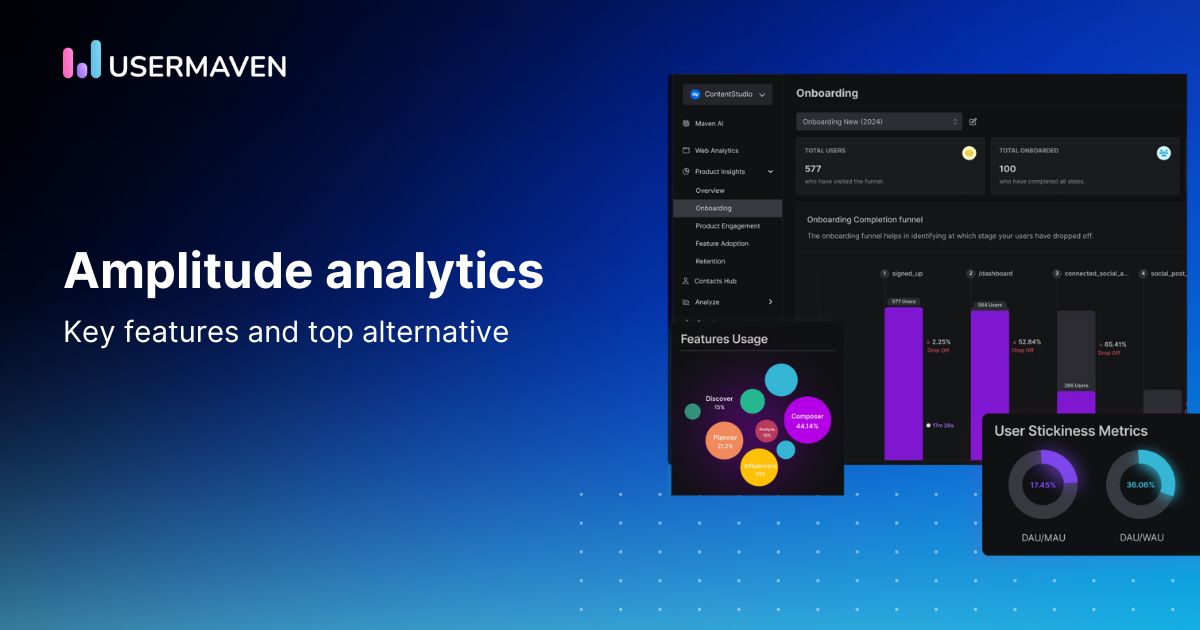
Amplitude analytics: Key features and top alternative
Amplitude analytics is a well-known name in the analytics space, offering a comprehensive suite of tools to track user behavior and drive data-driven decisions. It has a robust feature set, but with that comes complexity and a pricing structure that doesn’t always align with the needs of smaller teams or startups. For many businesses, navigating…
-
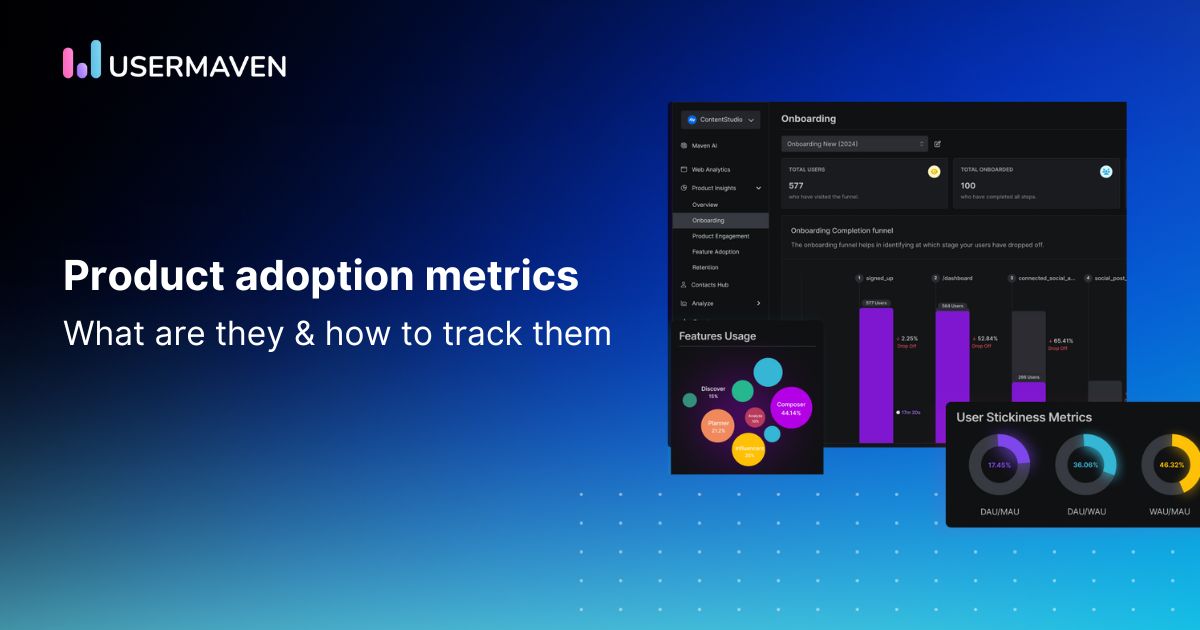
13 essential product adoption metrics to track for success
Every product carries a narrative – a tale of ambition, creation, and the drive to solve real-world problems. But in the world of innovation, it’s not enough to create something remarkable. The real challenge lies in understanding whether your product truly connects with its audience. Are users engaging as expected? Are they finding value in…
-
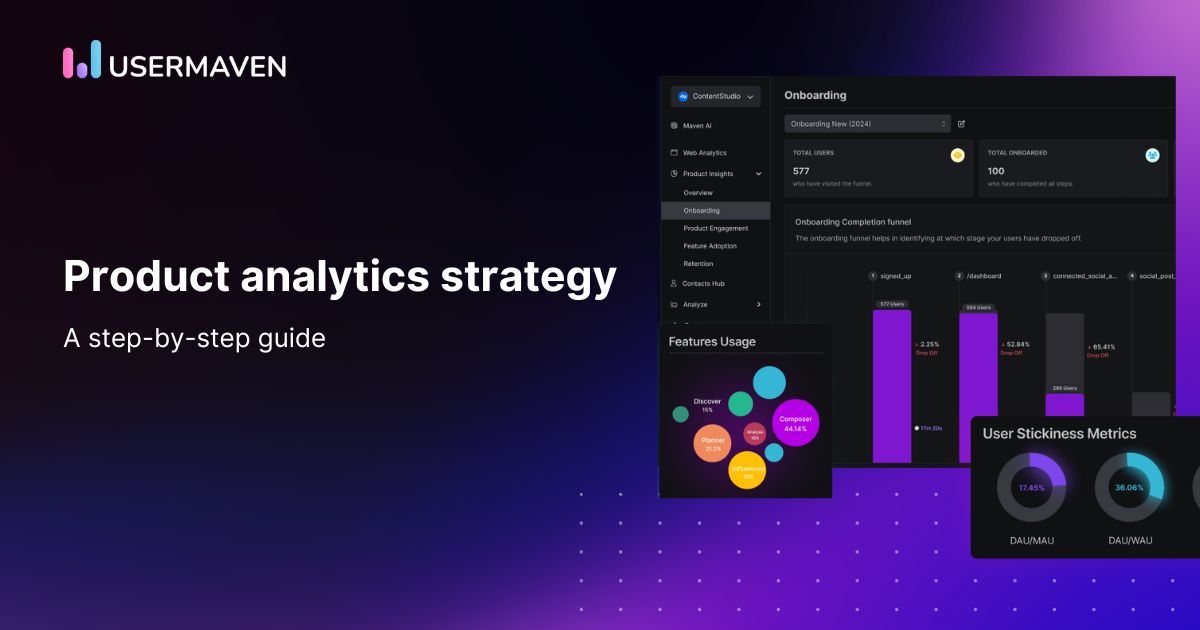
Building a successful product analytics strategy: A step-by-step guide
Crafting a winning product analytics strategy isn’t just about crunching numbers; it’s about turning data into actionable insights that drive success. In today’s competitive landscape, understanding user behavior and product performance is essential for growth. Whether you’re refining features, improving retention, or aligning your product with customer needs, a well-thought-out strategy helps you make smarter…
-
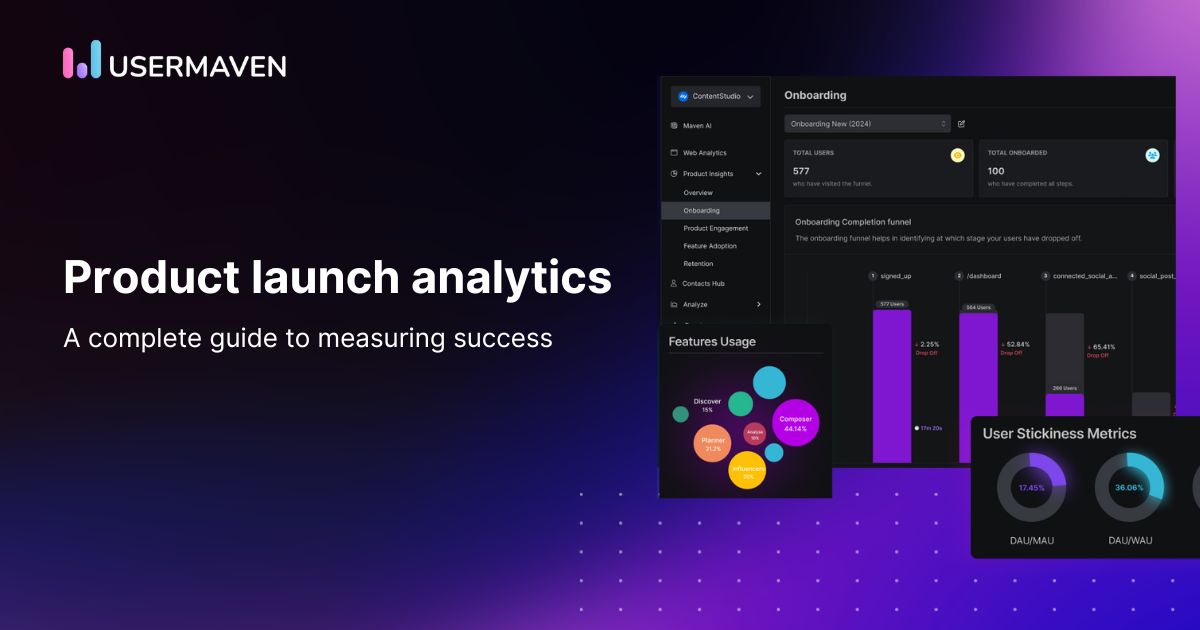
Product launch analytics: A complete guide to measuring success
Every product launch tells a story filled with milestones, challenges, and opportunities. But without the right insights, it’s hard to know if your story is a bestseller or missing key chapters. That’s where product launch analytics steps in – turning raw data into actionable insights about what’s working and what needs improvement. With tools like…
-

What is a sales funnel? Strategies, stages & how to create one
When it comes to converting casual browsers into loyal customers, businesses often face a challenging yet crucial question: How do you guide potential buyers from discovering your product to making a purchase? The answer lies in a well-structured sales funnel. A sales funnel isn’t just a buzzword in marketing; it’s a proven framework that transforms…
-
![[5 Top tips] Are you following these data governance best practices for your website?](https://staging-blog.usermaven.com/wp-content/uploads/2025/01/Data-governance-best-practices.jpg)
[5 Top tips] Are you following these data governance best practices for your website?
Managing data without the right tool and framework can quickly turn into a nightmare – data that’s inaccurate, hard to find, or even non-compliant. It’s a mess no one wants to deal with, but without following data governance best practices, it’s a risk every website faces. The trouble is that most of us don’t realize…
-
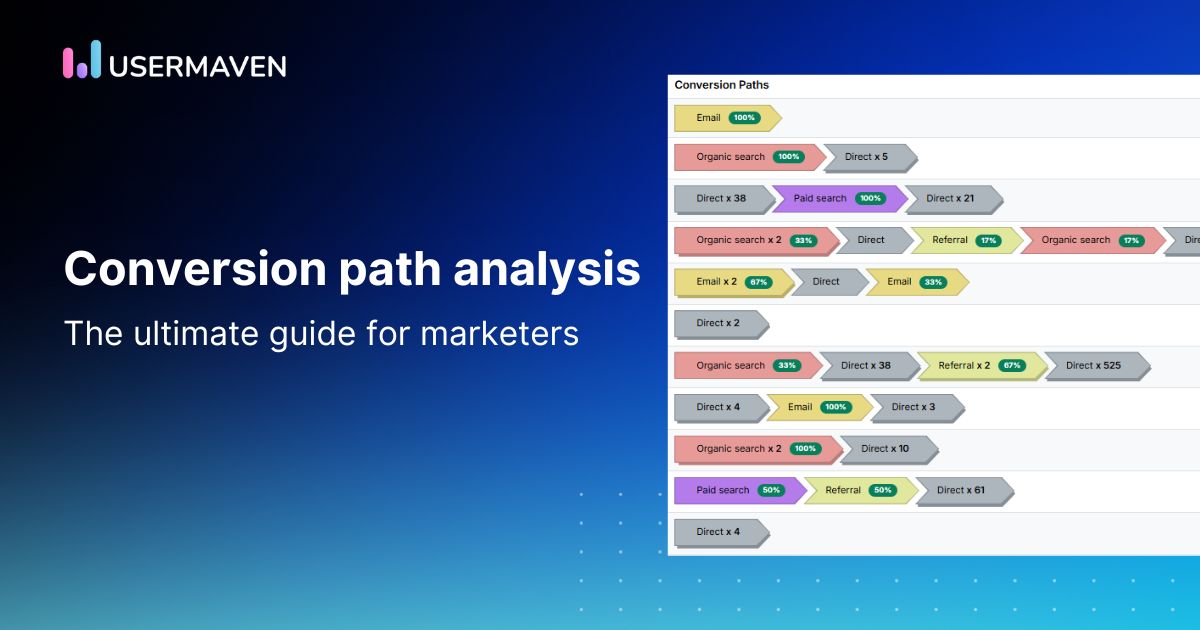
Conversion path analysis can make or break your marketing strategy
Marketers often ask: What turns a curious click into a committed customer? The answer lies in the art and science of conversion path analysis. Think of it as decoding the customer’s journey – every click, scroll and pause that leads them to say “yes” to your offer. It’s not just data; it’s the story of…
-
![What is first-party data [and its role in web analytics]](https://staging-blog.usermaven.com/wp-content/uploads/2024/12/First-party-data.jpg)
What is first-party data [and its role in web analytics]
Imagine this: you’re running a café, but instead of observing your customers, you rely on a stranger’s vague notes. They say things like, “Someone likes coffee” or, “People seem to enjoy pastries.” But which coffee? What kind of pastries? And who are these people anyway? That’s the reality of relying on third-party data – vague,…