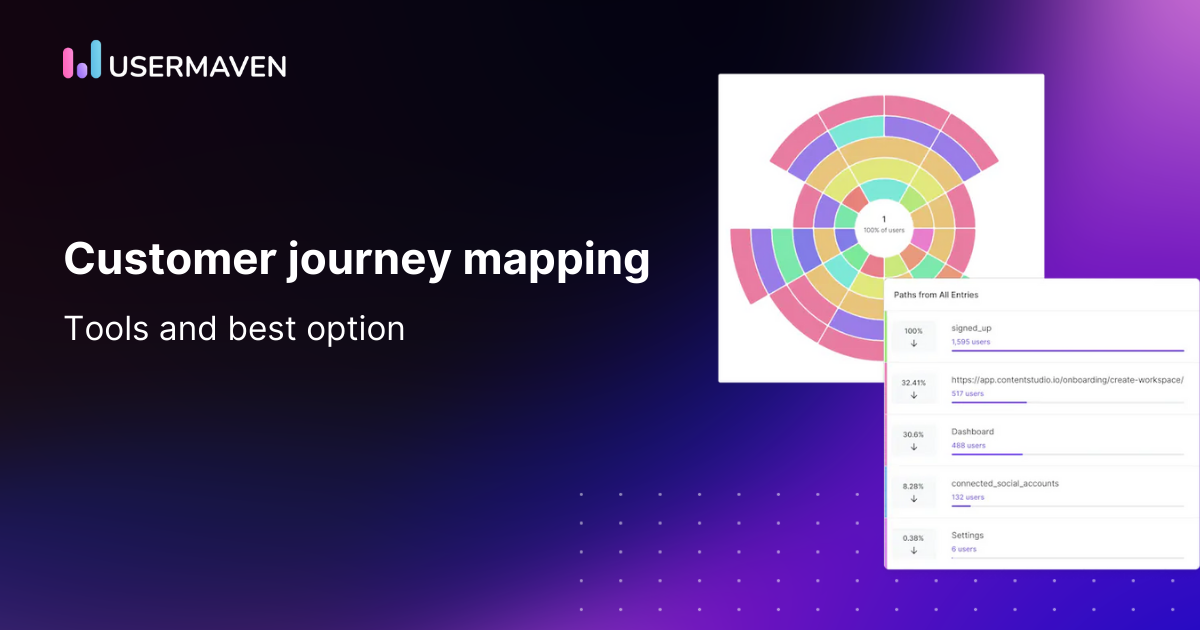
Understanding how users interact with your product is essential for growth and optimization. Customer journey mapping tools provide critical insights into user behavior, helping teams identify friction points and opportunities for improvement.
Customer journey mapping helps businesses see every step a customer takes when interacting with a brand. This practice lets companies identify weak links, improve key interactions, and build stronger connections with their customers. Whether you work in marketing, product management, or running your own business, using the right mapping tool can guide your team toward better customer understanding and improved performance.
In this comprehensive guide, we’ll explore the best customer journey mapping tools specialized for product analytics journey mapping, with a particular focus on the standout solutions in this space.
What is customer journey mapping, and why is it important?
Customer journey mapping produces a visual outline of all the interactions between a customer and a company. This illustration captures everything from initial contact to post-purchase service. When each step is visible, companies can better understand customer needs, identify moments of delight or frustration through customer behavior analysis, and make informed improvements.
This mapping practice brings clear benefits. It helps teams spot gaps in service that may be upsetting customers and reveals the stages where a customer might need extra support. Managers can see how their products are really performing – not just through sales numbers, but by knowing the customer’s point of view. Such insights from customer journey analytics provide a solid base for making decisions that benefit everyone involved.
A well-constructed map encourages collaboration among team members. When everyone is on the same page, teams can work together more effectively, share ideas quickly, and adjust strategies with confidence.
Additionally, data collected from these maps can be combined with other information sources like customer surveys or website analytics, giving teams a clearer view of performance and surfacing broader marketing insights for product managers. Then you’ll be able to see which of your initiatives are working and where you could improve, i.e., perhaps you need more touchpoints (such as adding SMS to workflows via platforms like Mobile Text Alerts), or perhaps your onboarding flows need to be optimized.
Simply put, customer journey mapping is essential for creating a pleasant and coherent experience. It helps companies stay in tune with customer needs and improves overall business performance.
How to choose the right customer journey mapping tool
Selecting the right tool requires you to weigh several points carefully. You want a tool that is not only simple to use but also powerful enough to cover the full range of customer interactions.
- A clean and intuitive interface
- Customization options
- Real-time collaboration capabilities
- Strong data integration with CRM, surveys, analytics
- Meeting security requirements
- Flexible pricing plans
Data plays a huge role in mapping customer interactions. Look for a tool with strong data integration options so you can pull in metrics from your digital analytics tools, surveys, or other analytic platforms. This feature lets you build maps that reflect true customer behavior.
Security is another factor. Ensure the tool meets your security requirements and keeps data safe. Finally, pricing matters. Many mapping platforms offer flexible payment plans or free trials, so take advantage of those to see if the tool fits your budget and needs.
1. Usermaven
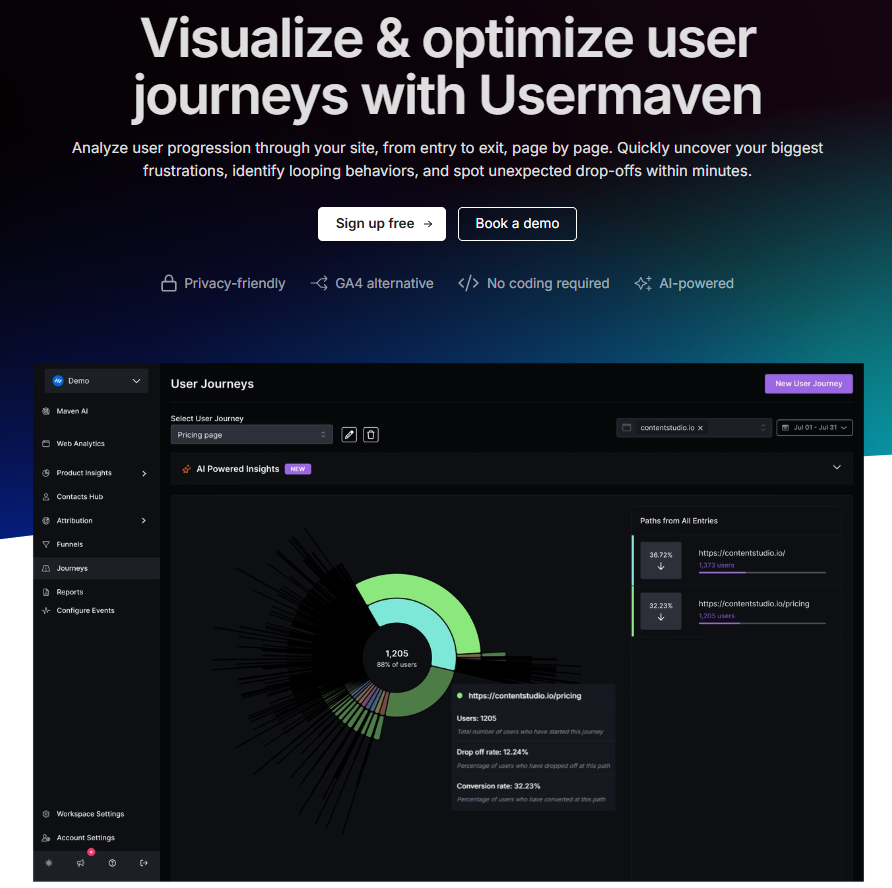
Usermaven has emerged as the leading product analytics customer journey mapping tool, offering a comprehensive solution that combines powerful analytics with intuitive visualization capabilities.
Key features:
- Real-time user journey visualization with path analysis
- Event-based tracking that captures every user interaction
- User segmentation based on behavior patterns
- Conversion funnel analysis with drop-off identification
- Cohort analysis for understanding user retention patterns
- Privacy-focused data collection compliant with GDPR and CCPA
Best for: Product teams that need comprehensive visibility into the entire user journey while maintaining data privacy standards. This is particularly valuable for SaaS companies and digital product teams focused on conversion optimization.
Pricing: Flexible plans starting from $49/month with custom enterprise options available.
What truly sets Usermaven apart is its ability to combine quantitative data with qualitative insights, helping teams better understand the customer journey funnel and not just what users are doing, but why they’re doing it. The platform’s AI-powered analytics engine also helps identify patterns that might otherwise go unnoticed.
2. Amplitude
Amplitude remains one of the robust product analytics platforms with powerful journey mapping capabilities.
Key features:
- Behavioral cohort analysis
- Predictive analytics for user behavior
- Cross-platform journey tracking
- Detailed retention analysis
- Integration with A/B testing tools
- Custom event tracking
Best for: Data-driven organizations that need deep analytical capabilities and have technical resources to implement and maintain the platform.
Pricing: Free starter plan; paid plans based on monthly tracked users.
3. Mixpanel
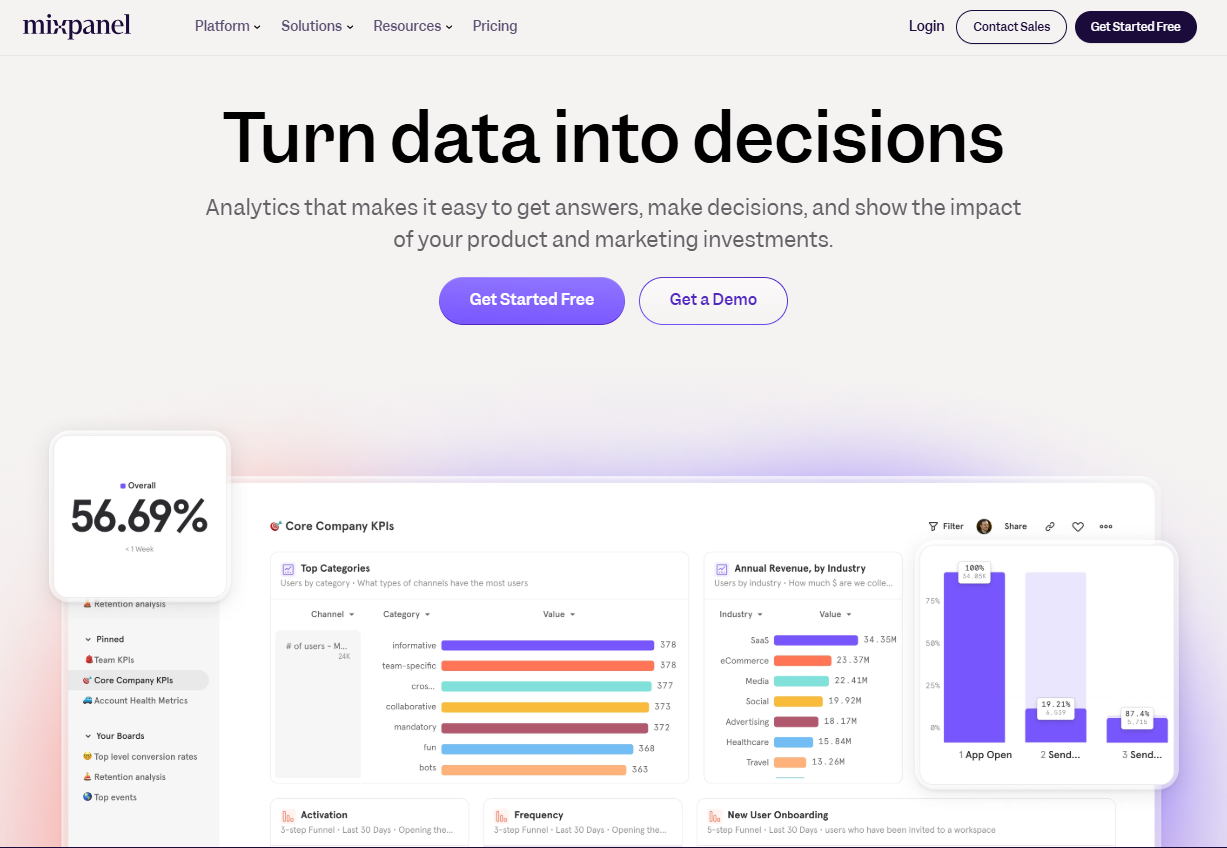
Mixpanel offers sophisticated journey mapping through its user flow analysis and funnel visualization tools.
Key features:
- Custom event tracking and properties
- Funnel analysis with conversion metrics
- Cohort analysis and segmentation
- A/B testing capabilities
- Real-time data processing
- Retention analysis
Best for: Growth teams focused on improving specific metrics and conversion rates through detailed funnel analysis.
Pricing: Free plan available; paid based on events.
4. Pendo

Pendo combines product analytics with in-app guidance, creating a platform that both maps and influences the customer journey.
Key features:
- User path analysis
- Feature adoption tracking
- In-app messaging and guidance
- NPS and feedback collection
- User segmentation
- Product roadmap planning tools
Best for: Product managers looking to understand user behavior and directly influence it through in-app experiences.
Pricing: Custom pricing based on product size and feature requirements.
5. FullStory
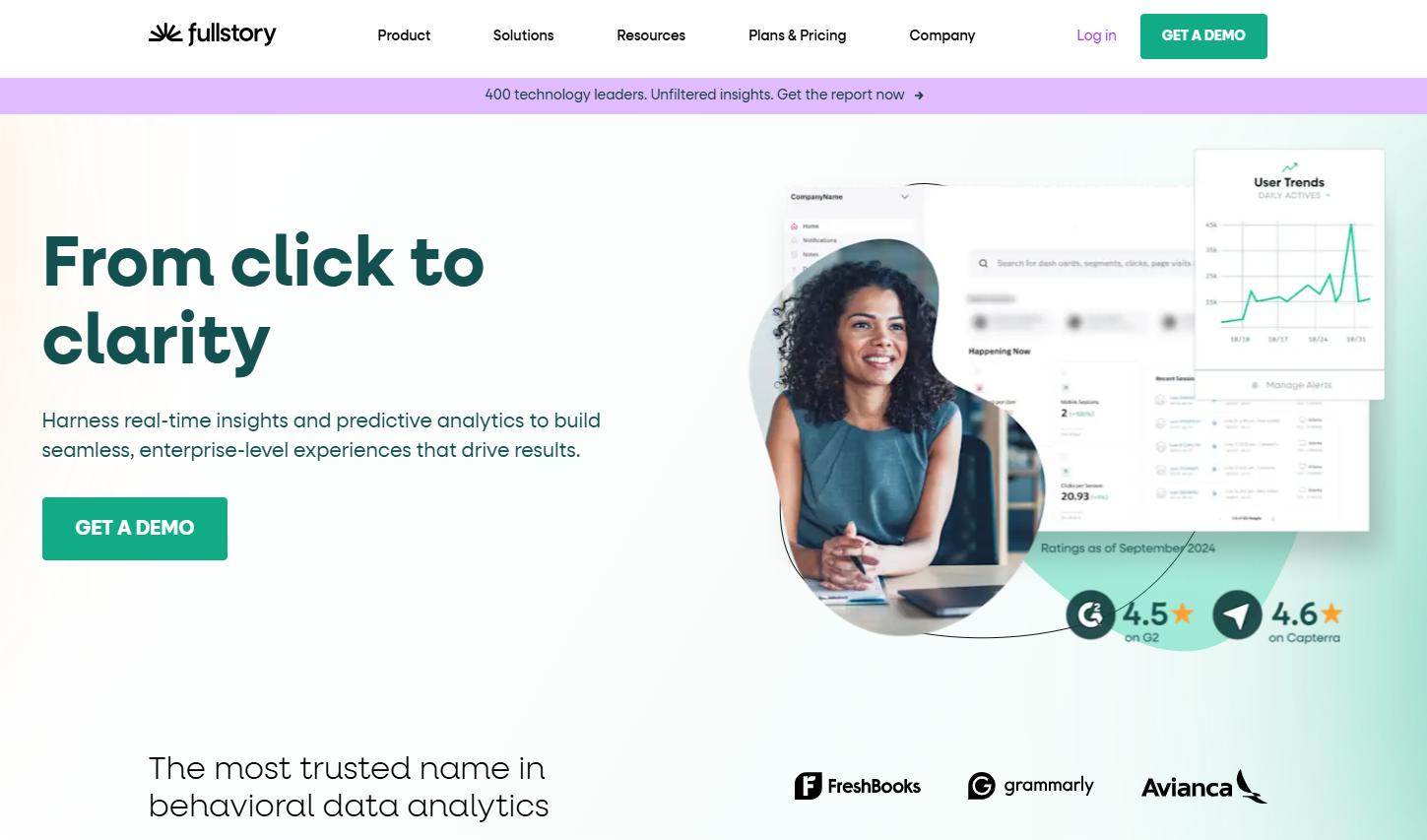
FullStory provides journey mapping through session replay and interaction analytics, giving teams visual insights into user behavior.
Key features:
- Session replay with journey context
- Heatmaps and click maps
- Frustration detection (rage clicks, error clicks)
- Search across all user interactions
- Integration with major analytics platforms
- Custom event tracking
Best for: UX researchers and product teams that need visual evidence of user behavior patterns and pain points.
Pricing: Starts at approximately $249/month based on session volume.
6. Heap
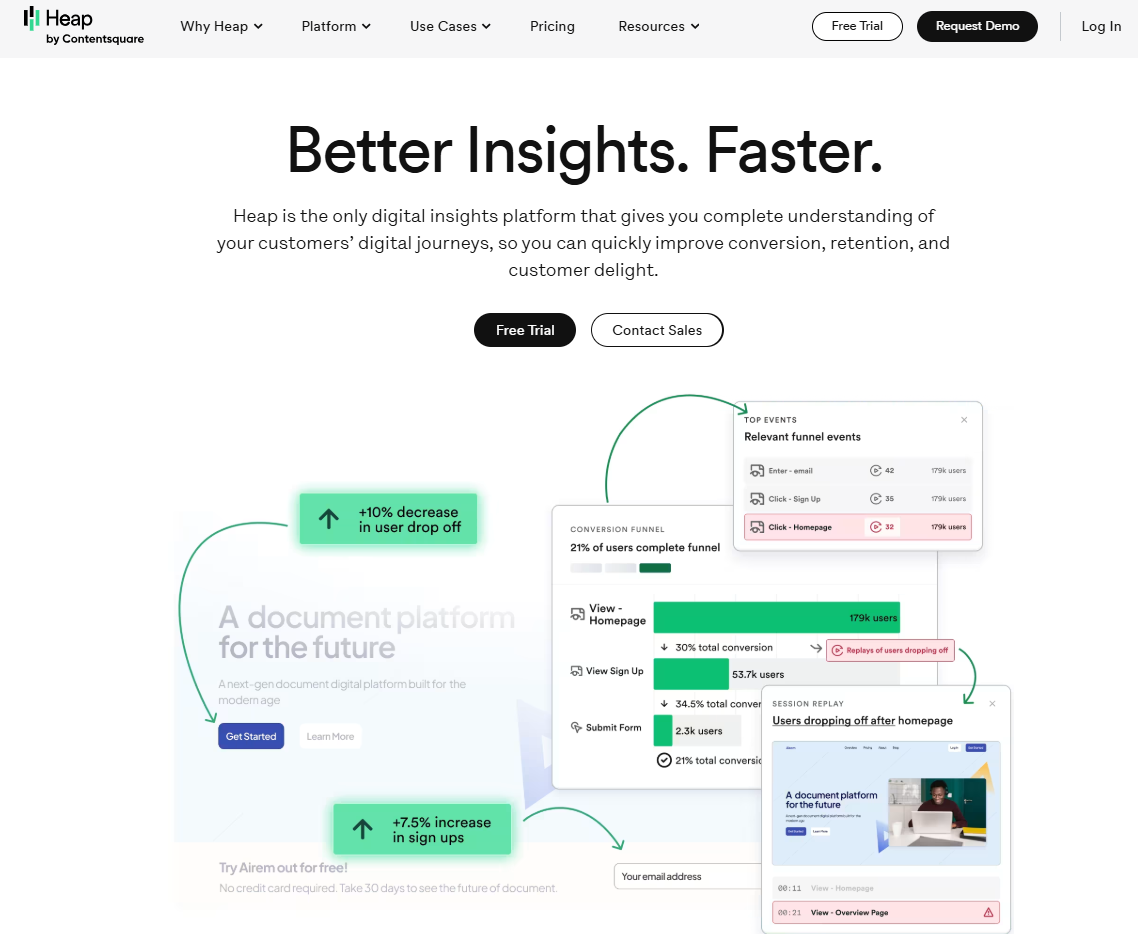
Heap’s auto-capture technology automatically records all user interactions, making it easier to map complete customer journeys without manual instrumentation.
Key features:
- Automatic event capture
- Retroactive analysis
- User journey visualization
- Funnel and path analysis
- Session replay
Best for: Teams that want comprehensive data collection without the need for extensive technical implementation.
Pricing: Free plan available; paid plans start at $3,600/year.
7. Google Analytics 4
Google Analytics 4 has evolved to include more robust journey mapping capabilities, focusing on the event-based model of user interactions.
Key features:
- Event-based tracking model
- Exploration reports for path analysis
- Audience segmentation
- Predictive metrics
- Cross-platform tracking
- Integration with Google’s marketing tools
Best for: Organizations already using Google’s ecosystem that need basic to intermediate journey mapping capabilities.
Pricing: Free tier available; paid plans through Google Analytics 360.
8. Hotjar
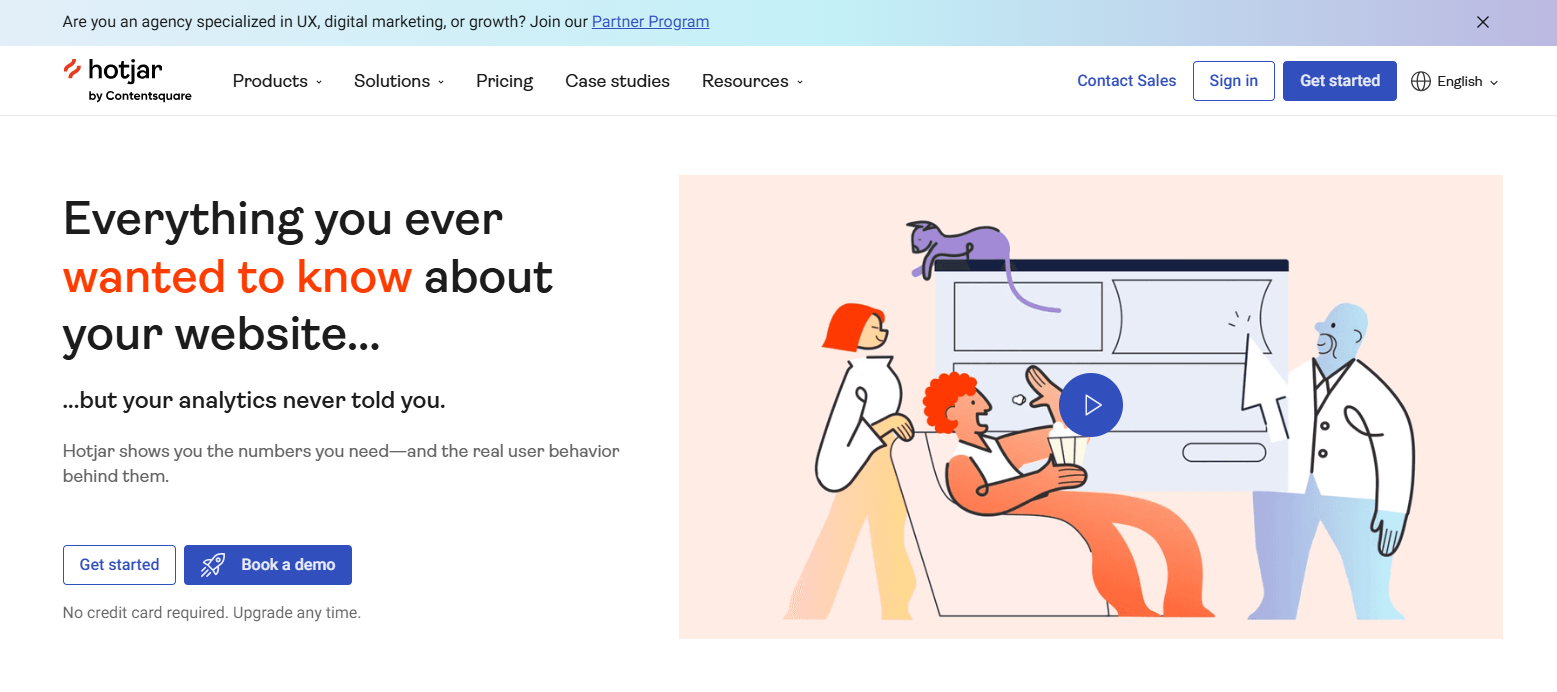
Hotjar combines heatmaps, session recordings, and feedback tools to create qualitative journey maps that reveal user intent and pain points.
Key features:
- Heatmaps and scrollmaps
- Session recordings
- Conversion funnel analysis
- Feedback polls and surveys
- Form analysis
- Ats recruitment for research
Best for: UX designers and marketers who need visual evidence of how users interact with specific pages and elements.
Pricing: Free plan available; paid plans start at $32/month.
9. Woopra
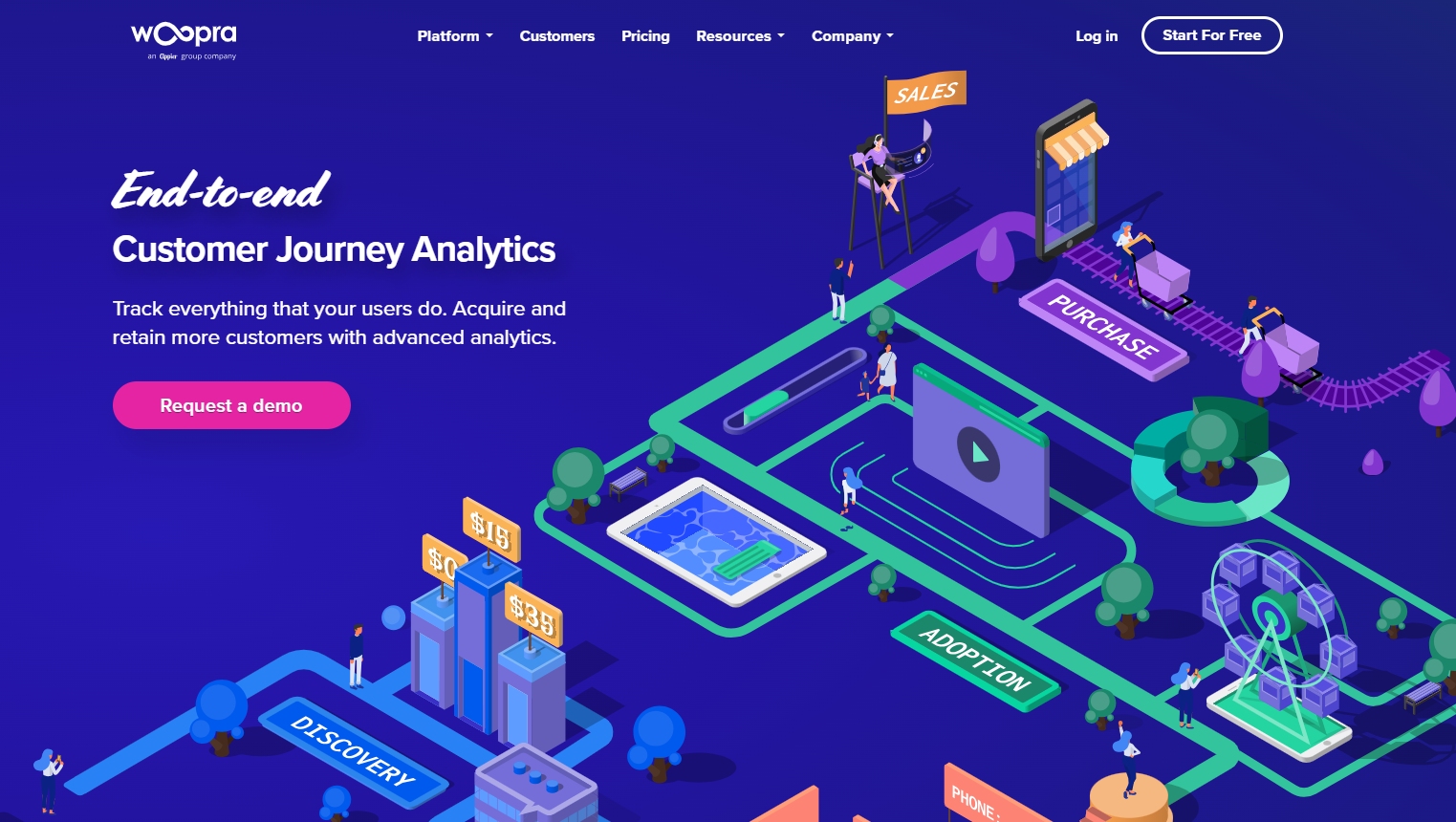
Woopra specializes in creating individual customer profiles and journey maps, focusing on the complete lifecycle from acquisition to retention.
Key features:
- Individual customer profiles
- Journey mapping and orchestration
- Retention analysis
- Automated triggers and actions
- Real-time analytics
- Integration with CRM and marketing tools
Best for: Customer-centric organizations that want to understand individual journeys and create personalized experiences.
Pricing: Free plan available; paid plans start at $49+/month.
10. Contentsquare
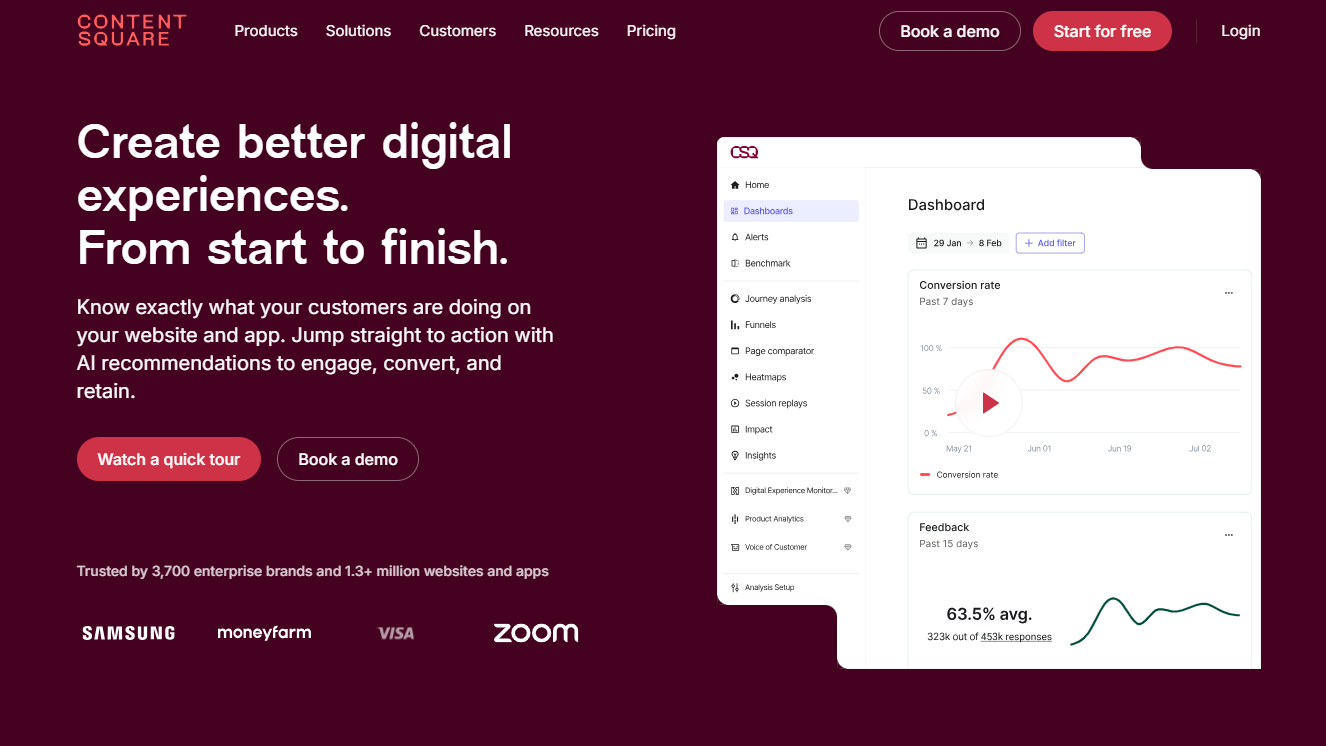
Contentsquare uses AI to analyze digital experiences and create journey maps that reveal both what users do and why they behave that way.
Key features:
- AI-powered experience analytics
- Journey analysis with revenue impact
- Zone-based heatmaps
- Session replay with journey context
- Frustration detection
- Competitive benchmarking
Best for: Enterprise organizations with complex digital experiences that need advanced insights into user behavior and intent.
Pricing: Custom enterprise pricing.
Choosing the right product analytics journey mapping tool
When selecting a tool specifically for product analytics customer journey mapping, consider these factors:
Granularity of data: How detailed do you need your journey maps to be? Some tools track every micro-interaction, while others focus on major conversion events.
Technical implementation: Consider the resources required to implement and maintain the tool. Solutions like Usermaven require less technical setup than some alternatives.
Integration capabilities: Ensure the tool can connect with your existing tech stack, including your product, CRM, and marketing automation platforms.
Visualization vs. analysis: Some tools excel at creating visual journey maps, while others provide deeper analytical capabilities. Determine which is more important for your team.
Price vs. value: Consider not just the cost but the potential ROI in terms of improved conversion rates and user retention.
Best practices for product analytics journey mapping
To get the most from your product analytics journey mapping tool:
- Define clear objectives: Know what specific questions you’re trying to answer through journey mapping.
- Start with key journeys: Focus first on mapping the most critical user paths that impact your business outcomes.
- Combine quantitative and qualitative data: Use both analytics data and user feedback to build complete journey maps.
- Segment your users: Different user types follow different journeys; make sure your maps reflect these variations.
- Identify and prioritize friction points: Use journey maps to discover where users struggle, prioritize improvements, and support stronger conversion analysis.
- Create cross-functional alignment: Share journey maps across teams to create a unified understanding of user experience.
Conclusion
Product analytics customer journey mapping tools have evolved significantly, offering unprecedented insights into user behavior. Usermaven has established itself as the leading solution in this space by combining comprehensive analytics with intuitive visualization tools and strong privacy features.
By investing in the right journey mapping tool, product teams can move beyond guesswork and make data-driven decisions that enhance user experience, increase conversion rates, and ultimately drive business growth. Whether you choose Usermaven or another solution from this list, the key is to consistently use the insights gained to create more intuitive, valuable product experiences.
[user_journeys]
Leave a Reply