Category: Data analysis
-
Heap pricing concerns: Pros, cons & better alternative
Most teams look at pricing first because it sets the rules for everything that comes after: tracking scope, reporting cadence, and who can actually use the data. Heap is a common pick for product analytics, so the key is understanding how its pricing plans are organized and how the model scales with real usage. In…
-
Heap vs. Mixpanel vs. Usermaven: A practical comparison
Data isn’t helpful if it’s too overwhelming or too complex. You need insights that are easy to act on and scalable to your needs. The challenge? Finding the tool that makes it easy to get there. The debate between Heap vs. Mixpanel vs. Usermaven is common, as each tool tackles data collection and analysis differently.…
-
![Mixpanel vs. FullStory vs. Usermaven [2026 comparison]](https://staging-blog.usermaven.com/wp-content/uploads/2026/02/Mixpanel-vs.-FullStory-vs.-Usermaven-.jpg)
Mixpanel vs. FullStory vs. Usermaven [2026 comparison]
Selecting the right analytics tool is important for optimizing your product analytics strategy. Each platform offers unique features that help track user behavior, measure key metrics, and improve overall performance. But which one aligns best with your needs? This guide will compare Mixpanel vs. FullStory vs. Usermaven, highlighting the key features, pricing, and benefits of…
-
Mixpanel pricing explained (+ discover a better alternative)
Mixpanel is a popular choice for product analytics, and it’s easy to see why teams consider it early. Mixpanel pricing is based on event volume, so what you pay depends on how much you track and how your product usage grows over time. On the pricing page, the tiers can look straightforward at first glance.…
-
Which analytics platform wins? Mixpanel vs. Amplitude vs. Usermaven
Choosing analytics used to feel simple. Pick a tool, add tracking, and expect clean answers. Now, expectations are sharper. Marketing teams need advanced attribution software that holds up when budget decisions are on the line. Product teams want real-time behavior, not delayed reports. And across the board, privacy compliance is no longer optional. That’s why…
-
![Amplitude pricing: Worth it or not? [Discover Usermaven as an alternative]](https://staging-blog.usermaven.com/wp-content/uploads/2024/11/Amplitude-pricing-1.jpg)
Amplitude pricing: Worth it or not? [Discover Usermaven as an alternative]
If you’ve been looking into Amplitude, you’ve likely come across its wide range of features, but also the steep price tag that comes with it. With Amplitude pricing evolving year after year, it can feel like the costs keep climbing, especially for businesses with growing user bases. So, before you pull out your wallet, let’s…
-
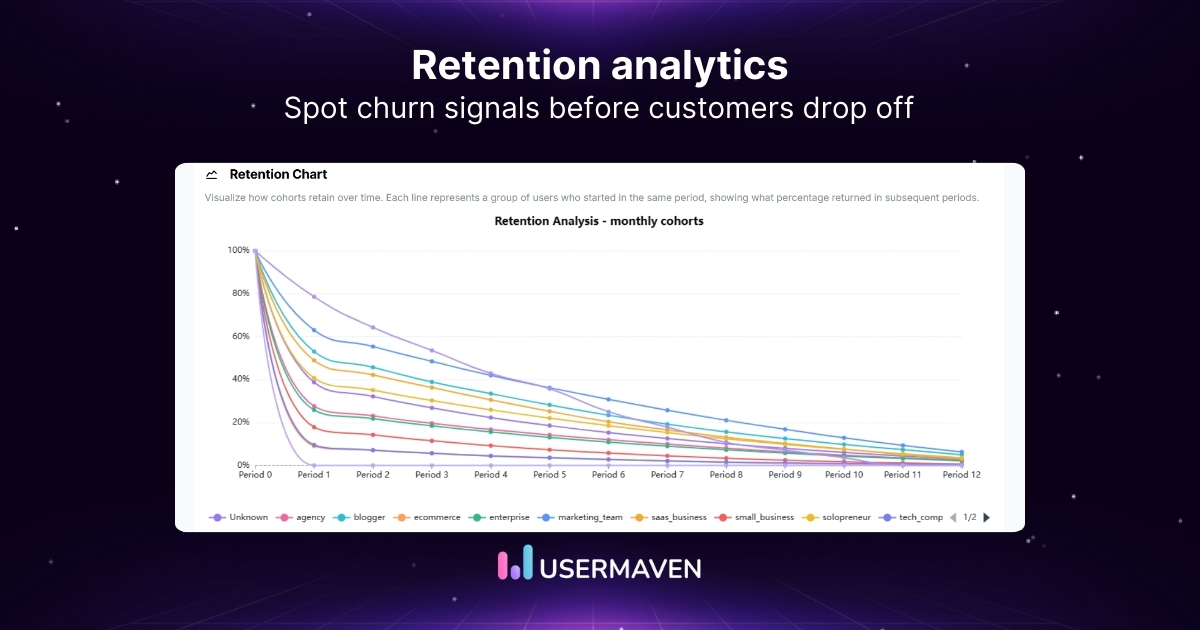
How vertical SaaS teams use retention analytics to spot churn early
Vertical SaaS lives and dies by two numbers: how many customers you add, and how many you keep. Most teams fixate on growth, but in 2026, retention is where the real pressure sits. Acquisition costs continue to rise, competition in service-based software keeps tightening, and churn erodes margins faster than most dashboards admit. If you…
-
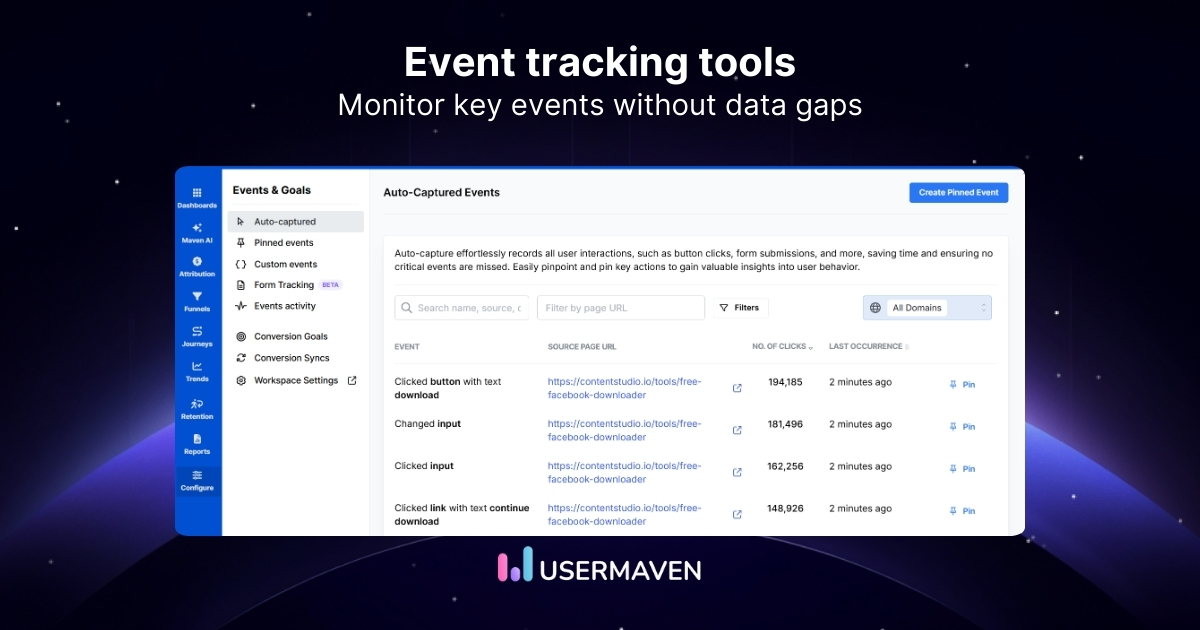
10 best event tracking tools for SaaS and websites
Every successful SaaS product understands user behavior at the action level. Event tracking tools make this possible by capturing how users interact with features, flows, and key moments across the product. With so many event analytics tools available, the difference often comes down to how quickly you can get reliable data and how easily teams…
-
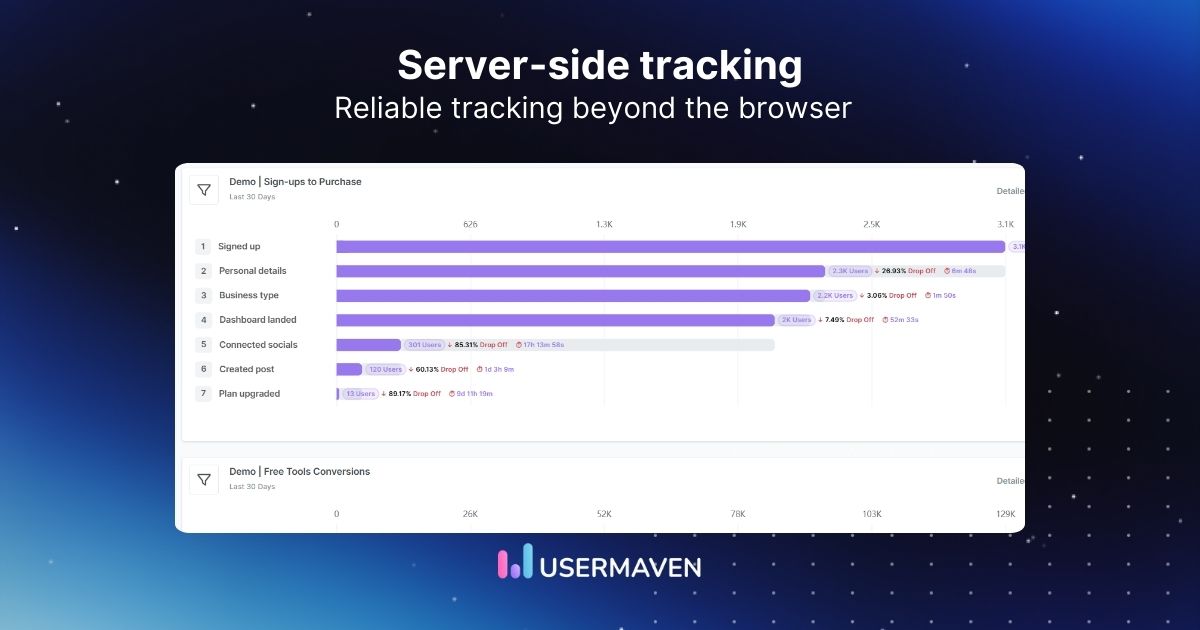
Server-side tracking: A simple guide for beginners
Third-party cookies are fading out, and browsers are increasingly limiting tracking by default. But you still need a reliable way to capture what happens on your site, such as pageviews, signups, and purchases. Server-side tracking keeps it simple: instead of sending tracking events straight from the browser to your tools, you capture key events on…
-
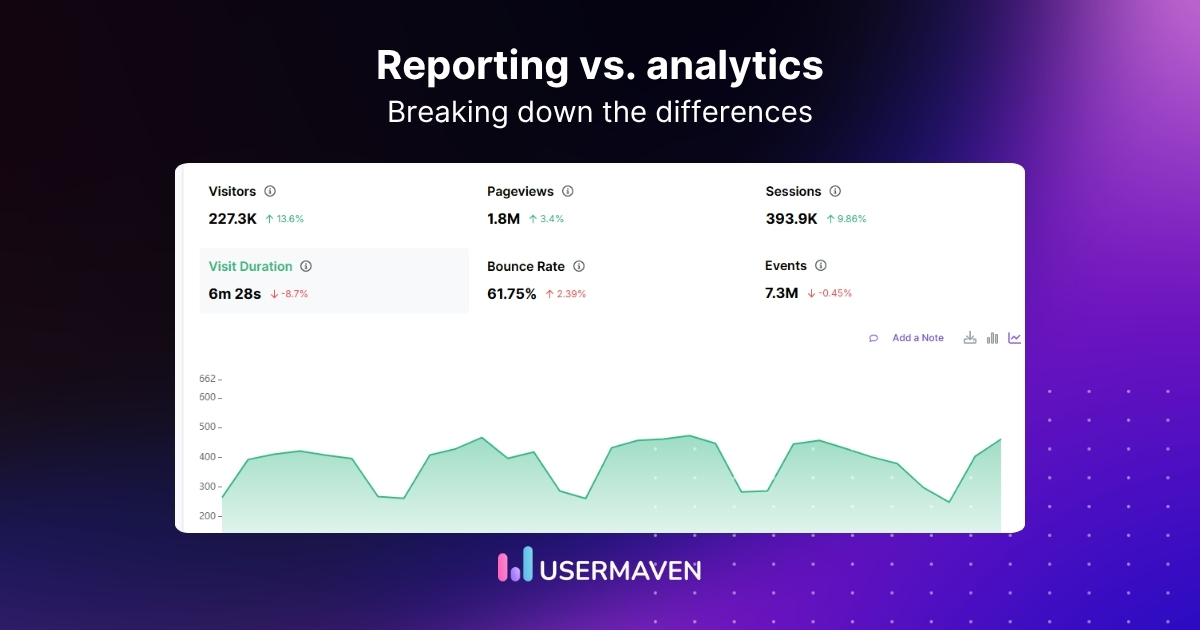
Reporting vs. analytics: Key differences you should know
Have you ever opened a report and wondered, “What exactly am I supposed to do with this?” You’ve got the numbers, the charts, but they don’t exactly tell you where to go next. That’s the classic gap between reporting and analytics. Reporting gives you the basics: what happened, the numbers, the charts. Analytics takes it…