Tag: SaaS analytics
-
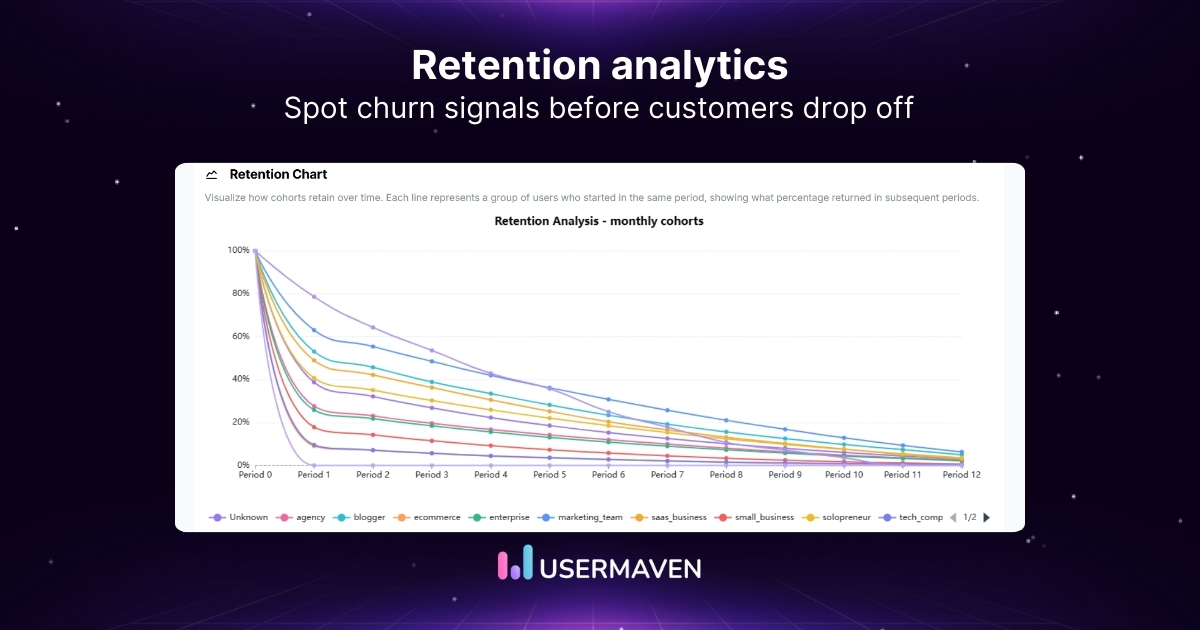
How vertical SaaS teams use retention analytics to spot churn early
Vertical SaaS lives and dies by two numbers: how many customers you add, and how many you keep. Most teams fixate on growth, but in 2026, retention is where the real pressure sits. Acquisition costs continue to rise, competition in service-based software keeps tightening, and churn erodes margins faster than most dashboards admit. If you…
-
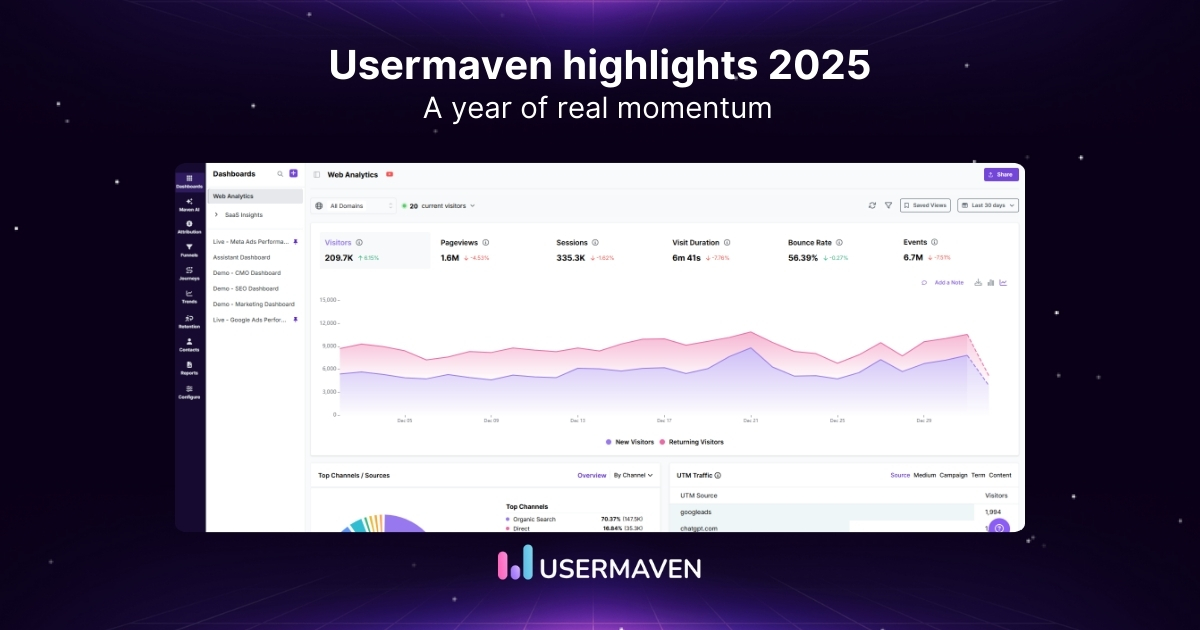
Usermaven highlights 2025: A year in review
At Usermaven, we spent 2025 doing one thing exceptionally well: listening closely to our users and fixing what actually mattered. Every quarter came with something new. We shipped features, fixed gaps, and made changes that genuinely improved how our customers use Usermaven. And the best part? We did it together. You told us what you…
-
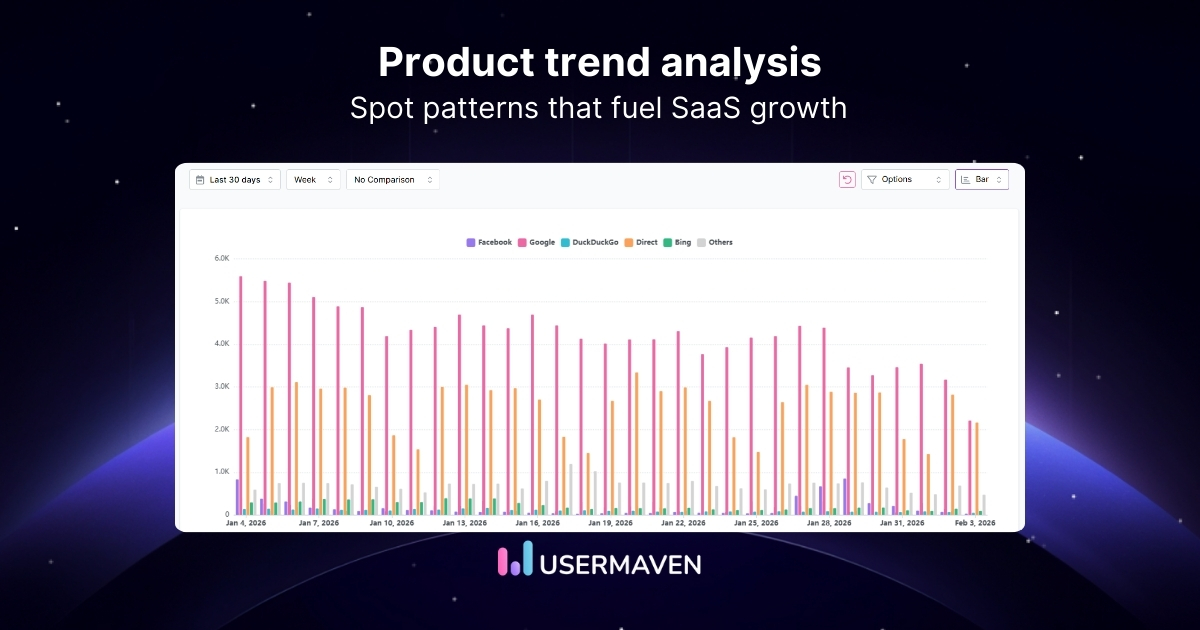
Product trend analysis to guide SaaS growth strategies
In SaaS, recognizing and responding to trends is key to staying competitive. Product trend analysis helps you understand user behavior, anticipate market shifts, and make decisions that truly move the needle. Whether it’s reducing churn, increasing feature adoption, or refining your product roadmap, trend analysis provides a clear path forward. With Usermaven, uncovering and acting…
-
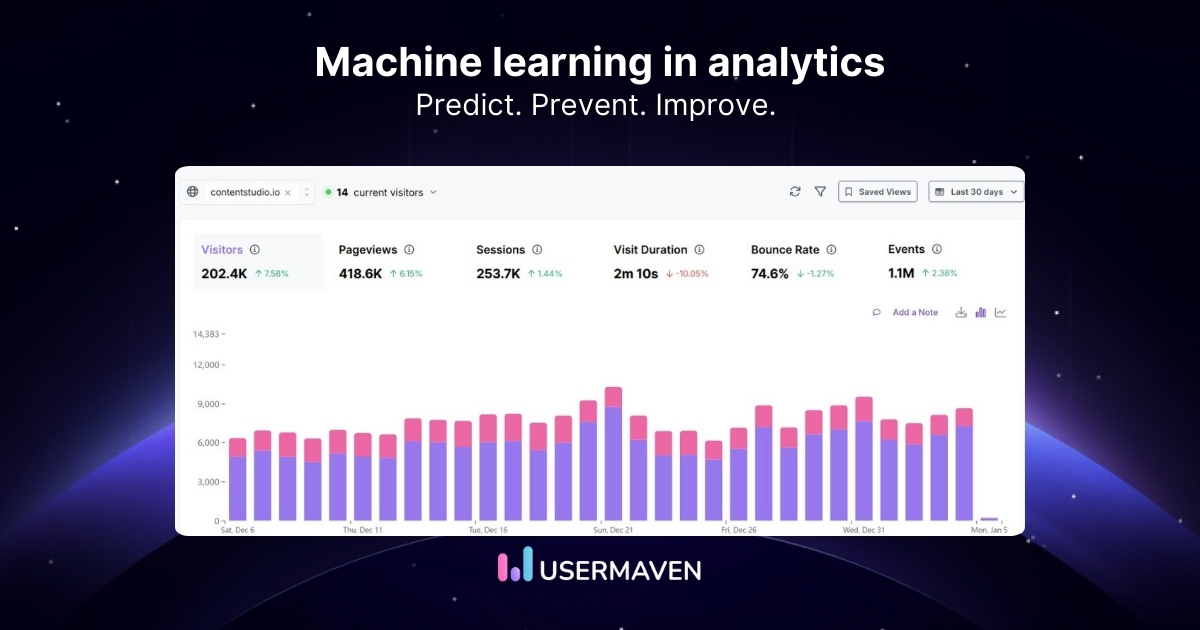
The importance of machine learning in analytics
Analytics is now part of everyday decision-making. Most organisations collect data continuously from systems, websites, transactions, and external sources. The challenge isn’t access anymore. It’s turning constant data flow into decisions people can act on. That’s where machine learning in analytics earns its place. Instead of relying only on static dashboards and fixed reporting cycles,…
-
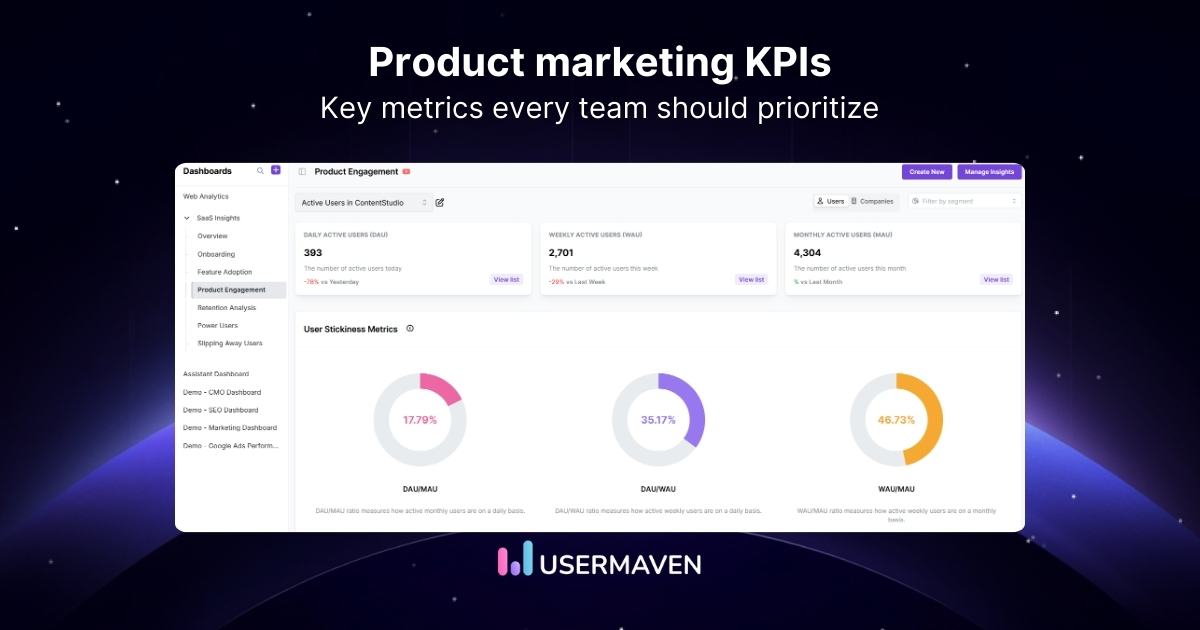
20+ Product marketing KPIs that matter most in 2026
Notice how some products seem to connect with users right away, while others never quite take off? It is rarely about features alone. The winning products are backed by teams that understand what their customers actually do, feel, and value. Product marketing KPIs, powered by solid product analytics, show how people use your product, where…
-
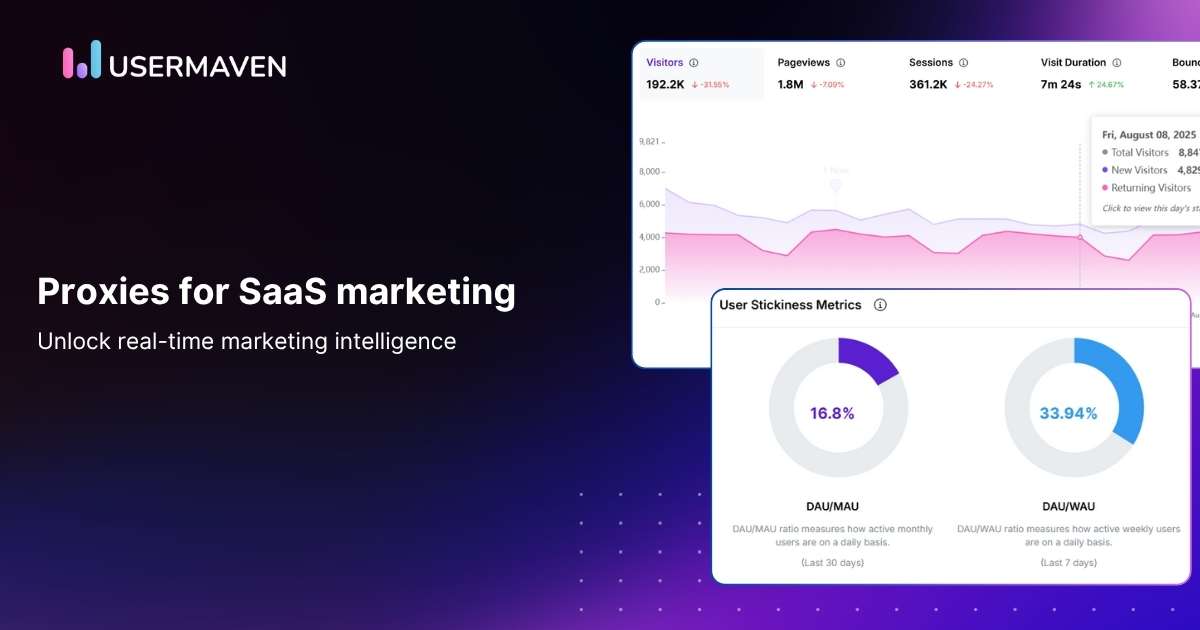
How proxies enhance data-driven SaaS marketing
Did you know that modern SaaS companies generate an impressive 2.7 terabytes of marketing data every week? Yet, 68% of them still struggle to make the most of competitive intelligence. The issue isn’t a lack of fancy analytics tools or a tight budget. The real problem is a fundamental challenge: gathering accurate, real-time market data…
-
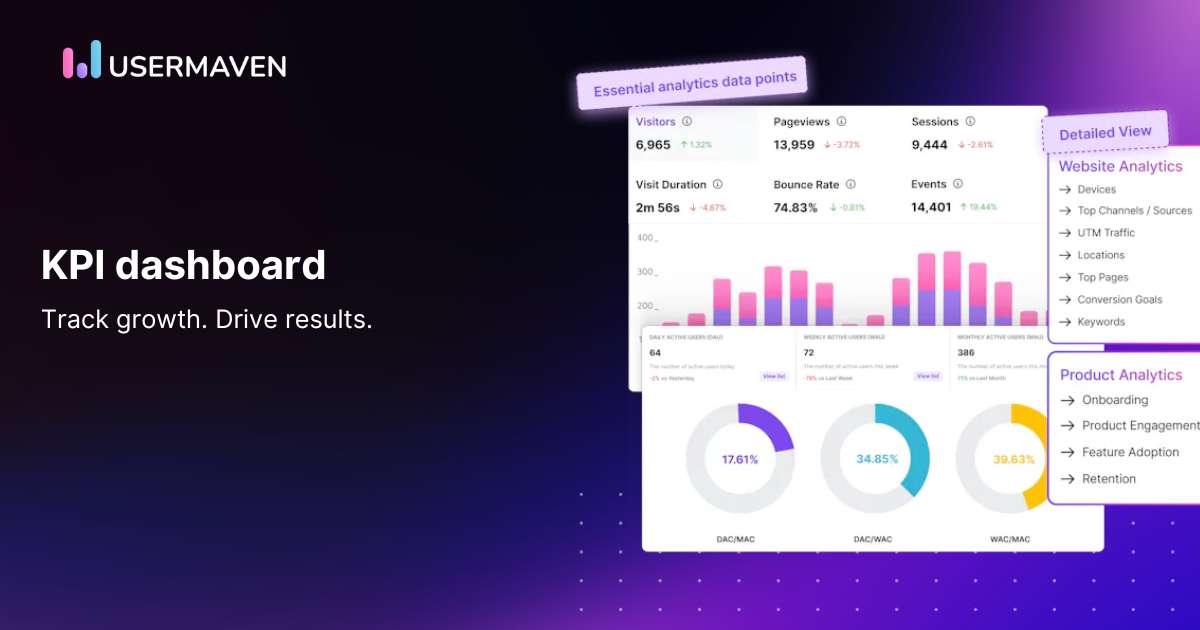
What SaaS companies need in KPI dashboards
As we move into 2026, data is becoming more crucial than ever for businesses. How you gather, use, and analyze data directly impacts how your company communicates and operates. For SaaS brands, managing KPI dashboards has become a must. These dashboards make it easier for professionals to access, understand, and adjust key metrics. A well-organized…
-
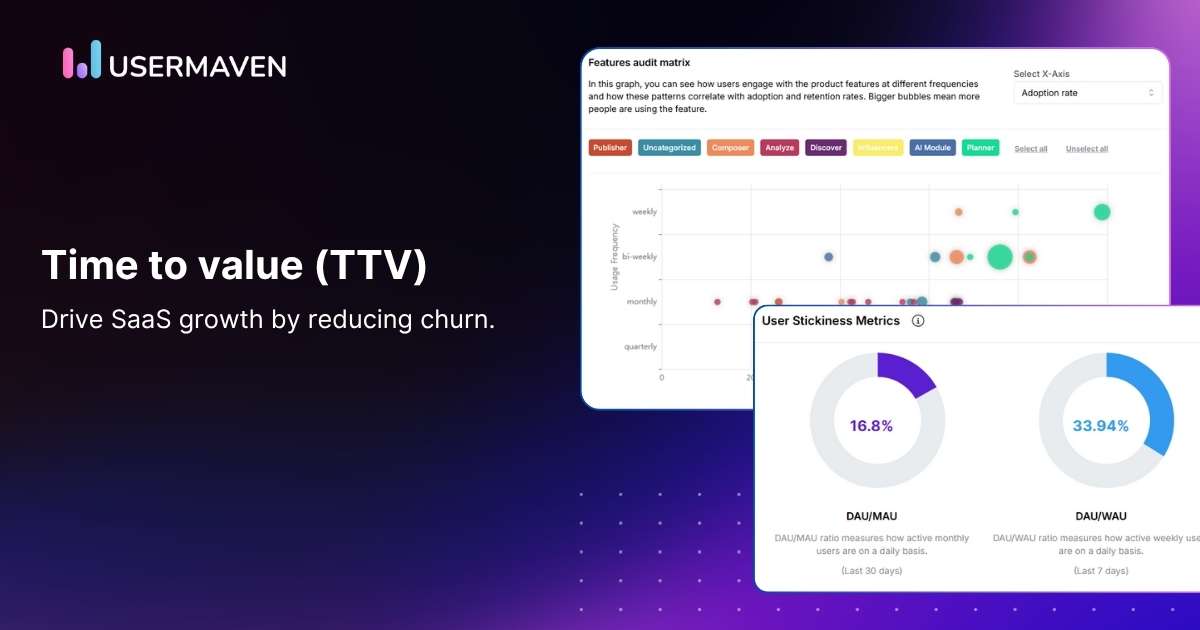
Understanding time to value and its impact on SaaS retention
You’ve just rolled out a shiny new feature, something you know is going to make your users’ lives easier. It’s sleek, it’s polished, and you’ve spent countless hours making sure it’s perfect. You send out the emails, roll out the updates, and eagerly track the results. But instead, you’re met with silence. Engagement is slow,…
-
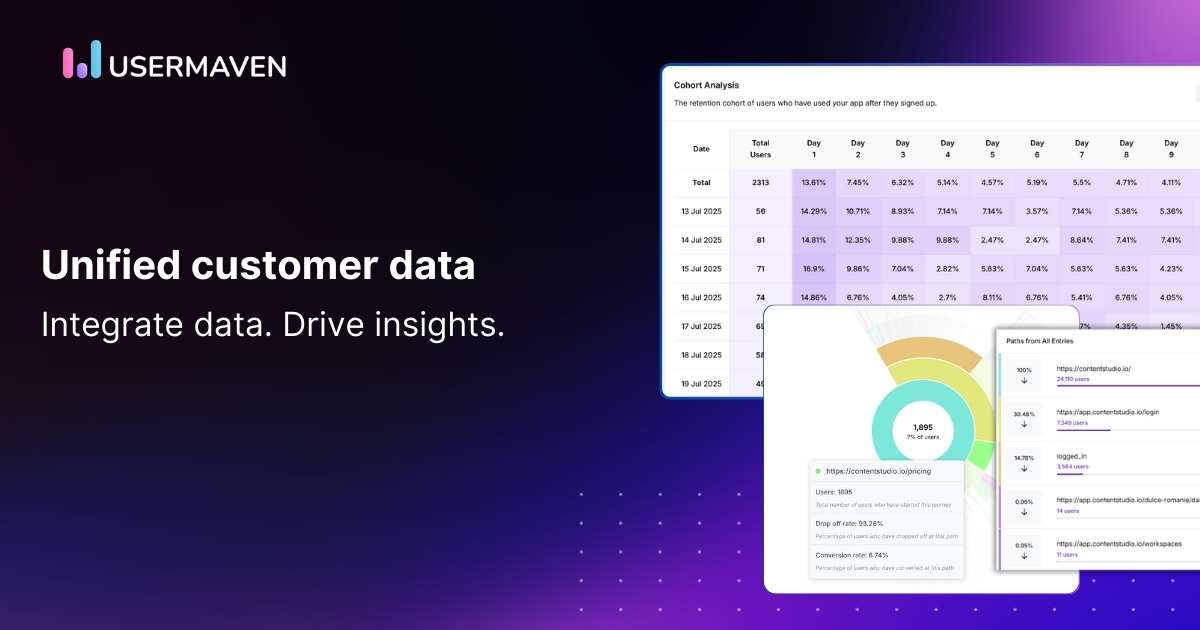
Integrating physical service data with SaaS analytics for a complete 360° customer view
Commerce continues to thrive in physical spaces such as stores, clinics, bank branches, and hotel lobbies. Each of these environments produces a wealth of signals: check-ins, queue times, purchases, and staff interactions. When captured, connected to the cloud, and enriched with modern analytics, these scattered data points transform into a clear and unified customer view.…
-
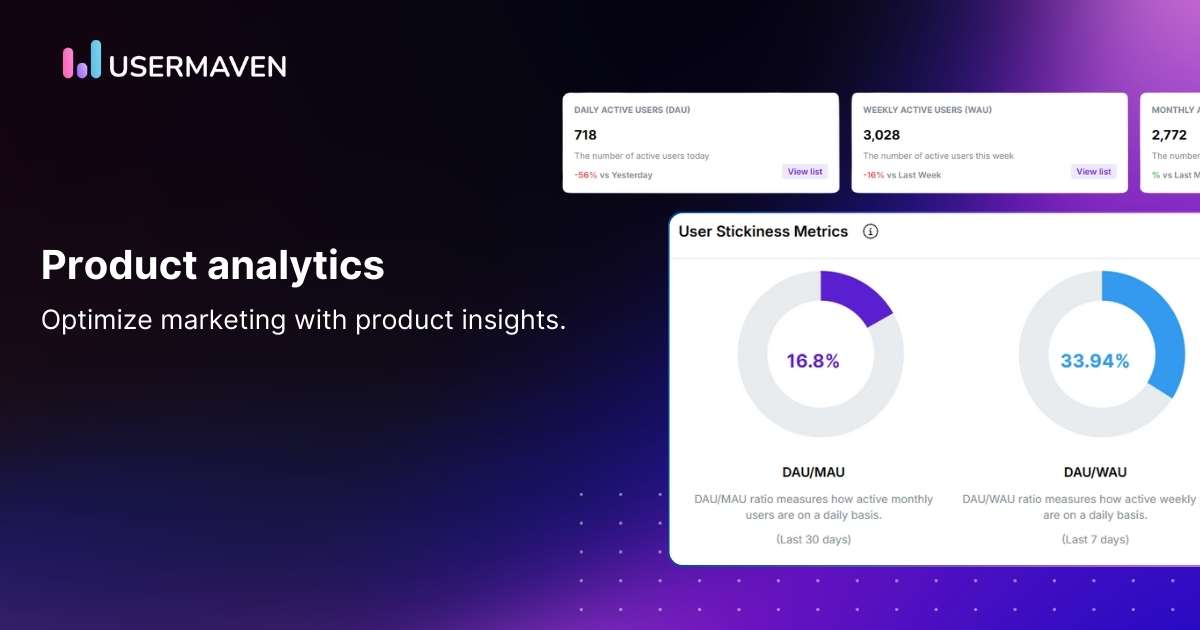
Product analytics as the new competitive edge in marketing
For companies competing in today’s digital-first economy, product analytics has emerged as a key driver of more innovative strategies and growth. Product analytics tracks user interactions to uncover patterns, preferences, and areas for improvement, helping companies optimize products and strategies. By using data to understand what customers actually do, companies can optimize their products and…